Three solutions in one.
Brand awareness
Social media
MyGentic impact
We lack positive visions.
Media mostly offers us dystopian futures. It is hard to look for solutions when there is little hope.
56% of young people believe humanity is doomed.
The Lancet Planetary Health, 2021: a survey of 10,000 people aged 16 to 25 in 10 countries.
Experience positive visions.
Innovators and scientists are already working on the solutions. To trust the future, people need to see it working, in stories set there.
Seeing is believing.
Tomorrow, Made Personal.
Same Maya. A different future in every episode.
One Maya, many futures.
Every episode drops the same Maya into a different timeline. A different job, a different family, a different world.
Each one gives her one hard choice.
Like Love, Death & Robots.
Ours is made for adults and children alike.
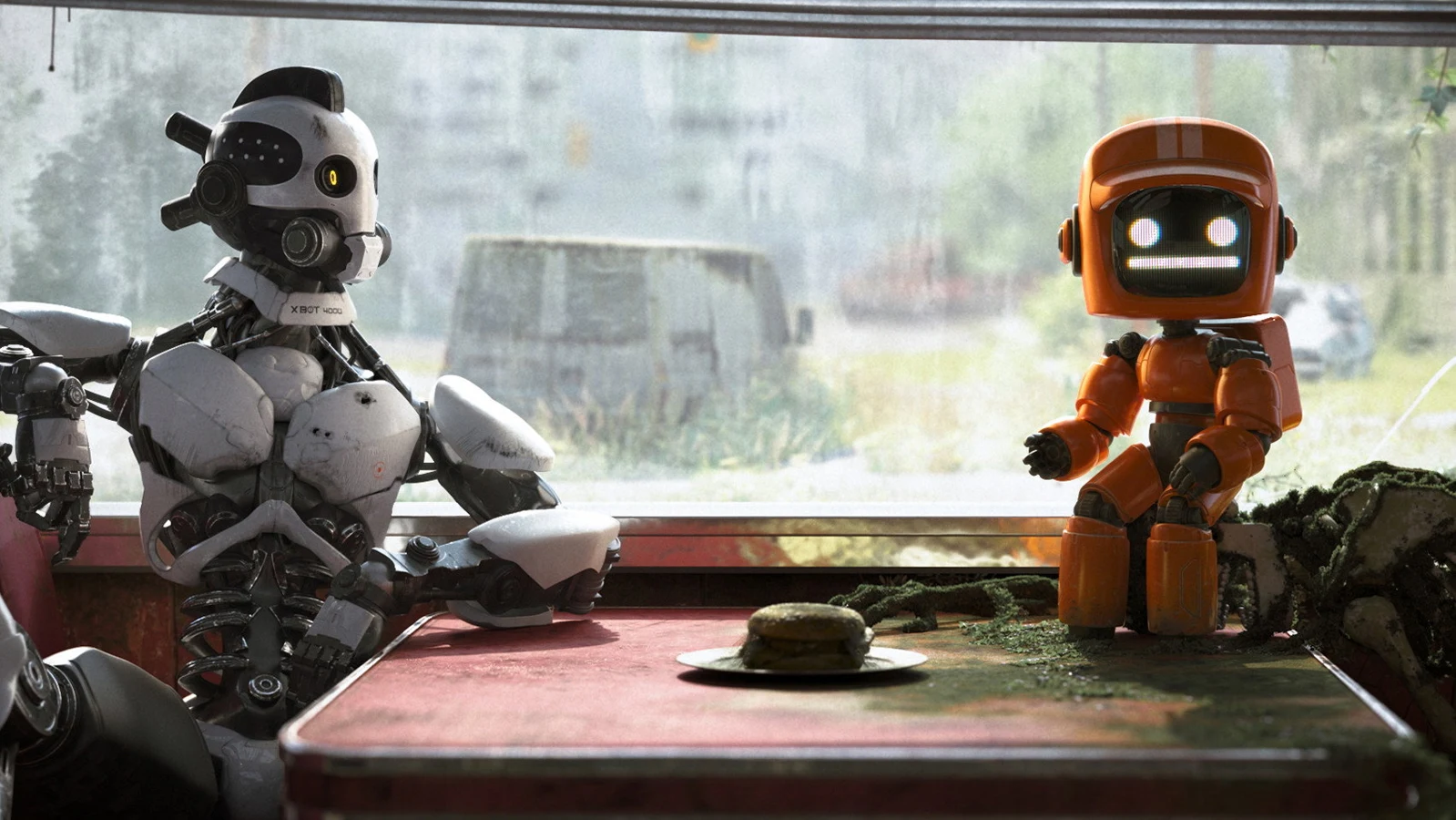 Love, Death & Robots, “Three Robots” (Netflix)
won since 2019
Volume 3 in Netflix’s global top 10
2020 to 2023, three times faster than new shows were made
Like them, every episode is a short story in a new world. The difference: we always show positive futures, never dystopias.
Sources: Television Academy; Netflix Top 10; Parrot Analytics, Jan 2020 to Oct 2023. Image: Netflix.
It all started with MyGentic.
Around 2030, MyGentic changed the world for good. Every timeline happens decades later. We never say the year.
Cities are green, every home has a personal AI, and people have time for each other.
Good futures still have hard choices.
Every world in the show is better than ours. That is the solution working.
But people still face real dilemmas there. We are not selling a perfect utopia. We show a future worth wanting, with real people in it.
Always there, never an ad.
Every episode shows the MyGentic name or logo somewhere natural: on a home helper, a plaque in the square, a tool in the workshop.
Never in your face, but always clear where this future came from.
Better worlds. Human choices.
In every timeline, technology has evolved drastically and changed people’s lives for good.
Every episode stands for human curiosity and people owning their own data, not pure material gains or data held by a few.
Maya still makes the choices that matter.
Three futures to start.
Each one is a better world with one hard choice.
The twin.
In this future, everyone has an AI twin that looks, sounds and works exactly like them.
The twins do the busywork, so people work a few hours a day and spend the rest with the people they love.
Mom’s 70th falls on the same night as Maya’s biggest pitch. Last year her twin went to the birthday in her place, and Mom has barely spoken to her since. Then Maya finds meetings in her twin’s calendar that she never made.
What is her twin really working on?
The robot.
In this future, every home has a helper robot that cooks, cleans and helps raise the kids.
Nobody is lonely, and every neighbor gets looked after.
Old robots are wiped when they retire. Maya can take a free new robot, or fight to keep Pip’s memories. But for years, Pip has slipped out of the house every night at 3 a.m.
Where does Pip go at night?
The workshop.
In this future, machines make anything in minutes, so things are almost free. People pay with time credits, earned by giving real hours to others.
Teaching, caring and making by hand are what people value most.
A factory offers Leo a lifetime of time credits to scan his hands, so machines can copy his craft forever. Maya has to help him choose: take the credits, or keep the craft human and teach it. Then they notice that every maker who said yes has stopped making things.
What did the scan take from them?
First look.
An early mood test from our animation team, shown without sound.
15 minutes, every two weeks.
Long enough for a real story, short enough for a lunch break.
A new episode on our YouTube channel on the same day every other week, so viewers know when to come back.
80% made with our own AI.
The best part: we can produce about 80% of each episode with Tubescale, our own AI production technology.
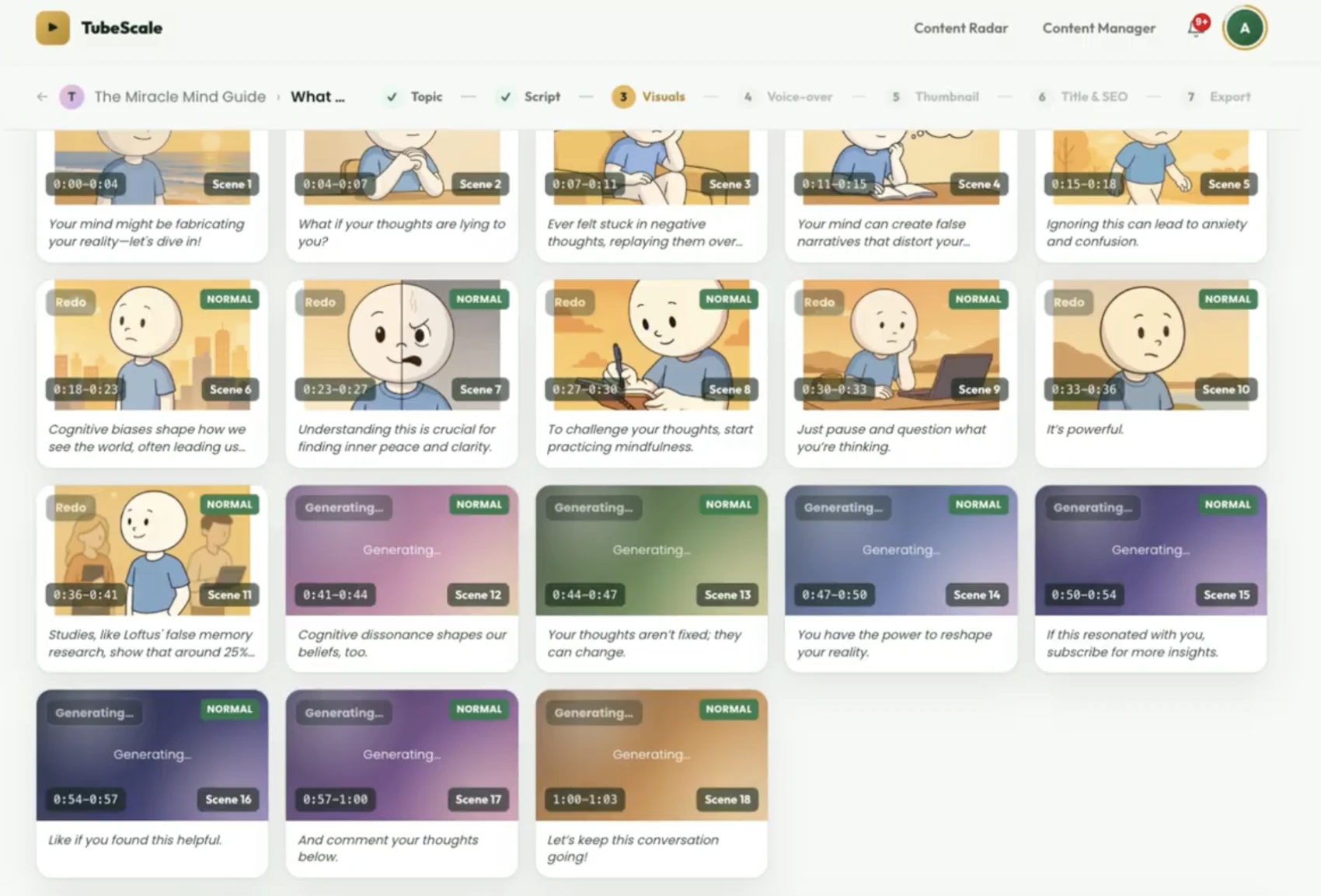
Short clips bring the reach.
Short vertical clips every day on three platforms.
Each one points back to the full episode on YouTube.